Spotting Damage in Eaves and Roofline
Causes of Rot, Pest Infestation, and Water Damage
Over40% of South African homes experience some form of roofline deterioration before their twentieth birthday, a figure that climbs sharply in coastal regions like Durban or Cape Town. The eaves are often the first casualty, silently absorbing moisture long before you notice a stain on the ceiling. When the protective barrier fails, the timber underneath becomes a sponge. This is where the cost of neglect multiplies quickly, transforming a simple repair into a structural headache.
The primary culprit is rot, driven by persistent dampness and poor ventilation. Warm, moist air trapped under the roof sheeting creates a perfect environment for fungal decay. This process weakens the board’s integrity, causing it to bow and pull away from the wall. Then come the opportunists.
– Wood-boring beetles that target seasoned timber.
– Termites that leave a muddy trail and hollow the core.
– Rodents that seek nesting spots near the warm, dry void.
Water damage compounds the issue, often stemming from clogged gutters or cracked sealants at the joints. When rain overflows, it saturates the edges rather than draining away. In Joburg’s highveld storms or the Western Cape’s winter rains, this relentless assault leads to peeling paint and swollen boards. You might see dark streaks or a chalky residue, indicators that the protective coating is failing. Ignoring these symptoms invites the very conditions that necessitate expensive fascia and soffit repairs. The trick is to catch the discolouration on the underside before it becomes a gaping hole.
Risks of Neglecting Roofline Maintenance
Walk the perimeter of your home on a clear morning. Look up at the eaves where the roof meets the wall. That thin line of shadow is where trouble hides. A slight sag in the roofline or a gap at the corner tells you the timber beneath has already started to shift. Catching these signs early is what separates a quick fix from a full overhaul.
Spotting damage in eaves requires attention to small details:
- Peeling paint that exposes bare wood.
- A soft spot when you press on the board.
- Visible daylight through a joint.
Each of these signals means the protective envelope is breached. The longer you wait, the deeper the moisture travels into the rafters. Neglecting roofline maintenance shortens the life of your boards and compromises the structural connection between your walls and roof. In South Africa’s harsh sun and sudden storms, that connection is under constant stress. Professional fascia and soffit repairs restore the barrier before the damage reaches the interior. A few hours of work now can save you from a ceiling collapse later. And when you finally schedule fascia and soffit repairs, the process is straightforward for an experienced contractor.
Material Options for Eaves and Roofline Replacement
Traditional Wood Choices and Their Benefits
There is a reason many Cape Dutch homes still display their original yellowwood fascias after centuries. Traditional timber remains a trusted choice for eaves and roofline replacement, offering a warmth that synthetic materials cannot replicate.
- Meranti, a dense hardwood, resists warping and accepts paint well.
- Siberian larch holds its shape in fluctuating humidity, which suits coastal South African climates.
- Yellowwood, our indigenous timber, provides long service when properly seasoned.
When you choose timber for fascia and soffit repairs, you gain workability. I have watched carpenters shape, join, and scribe wood on site, making intricate rooflines far simpler to execute than with rigid composite boards. This flexibility also allows for spot fixes, saving you from replacing entire runs.
Vinyl and Aluminium Alternatives for Durability
Vinyl and aluminium have transformed the roofline industry, yet many homeowners still view them as budget substitutes for timber. That reputation is outdated. Modern vinyl formulations resist UV degradation and impact, while aluminium offers rigidity that never requires repainting.
For fascia and soffit repairs in South African coastal conditions, these materials eliminate the seasonal upkeep that timber demands. Salt-laden air corrodes metal fittings, but aluminium’s anodised protective layer withstands the assault. Vinyl, being entirely non-metallic, sidesteps corrosion altogether.
Consider the practical differences:
- Vinyl is lightweight and affordable, needing only a mild detergent rinse.
- Aluminium withstands hail and high winds without cracking or splitting.
Neither material will rot, which removes the most common cause of roofline failure. Repairs become a rare event rather than a recurring expense.
Composite and Engineered Materials Explained
Composite boards arrive with the quiet menace of something that refuses to die. They bind wood fibres with polymer resins, creating a material that shrugs off the humidity plaguing South African coastlines. Engineered fibre cement offers a similar resilience, hardened into thin, unyielding panels!
For fascia and soffit repairs, the methodology changes. The usual failure points, the seams where moisture gathers, stop mattering. These materials resist warping and ignore pests entirely.
The trade-off appears in weight and rigidity. Composite sections can sag when support spacing is ignored, and cutting them demands carbide blades. I have watched enough cyclical upkeep to value permanence that timber never promised.
Matching Materials to Your Home’s Architectural Style
Johannesburg’s older suburbs hold a chaotic mix of Georgian facades, Edwardian verandas, and mid-century modern boxes. I have walked these streets for years, and the roofline anchors everything. Choose the wrong material for fascia and soffit repairs, and the house reads as off, even if the structure is sound.
Matching materials means studying the original profiles. A Victorian home needs deep, decorative bargeboards, not slim aluminium lines. A Cape Dutch gable demands a smoother finish, something with clean edges that follows the curve. Fascia and soffit repairs fail aesthetically when the new sections ignore the home’s proportions.
Consider the weight of the decision:
- Timber suits heritage homes and accepts paint well.
- Aluminium fits modern and industrial styles with its thin profile.
- Composite works when you want the timber look without the upkeep.
The material must answer the house, not the other way around.
Weather and Climate Considerations by Region
Ninety-seven percent of roof failures trace back to water entry at the eaves. That number should make any Johannesburg homeowner pause mid-bite of their morning toast. The roofline is not merely decorative. It is the first line of defence against Highveld thunderstorms, and fascia and soffit repairs in this region demand more than a cursory glance at a paint swatch.
Weather in Gauteng is a study in extremes. Hailstones the size of golf balls, ultraviolet radiation at altitude, and sudden temperature swings all punish materials that were never designed for the African sun. A repair that works in Cape Town’s maritime climate will not necessarily survive a single summer in Pretoria. The UV degradation alone can warp cheap vinyl within eighteen months, leaving you with a roofline that resembles a wavy potato chip.
Coastal regions tell a different story. Salt-laden air from the Indian Ocean corrodes aluminium fascias at an alarming rate. The oxide layer that protects the metal inland simply cannot cope with the constant assault of chloride. Conversely, the Cape’s wet winters create the perfect breeding ground for timber rot, particularly where eaves meet gable ends in poorly ventilated spaces. Choosing a material for fascia and soffit repairs without considering these regional conditions is like wearing a puffer jacket to a Durban beach braai.
The interior of the country offers its own peculiar challenges. The Karoo and Free State experience dramatic thermal cycling, where materials expand and contract daily. This movement loosens fixings and cracks sealants, which then allows moisture to seep into the timber substrate. A rigid, unyielding fascia board will eventually split. The material needs to flex with the temperature swings, not fight them.
– Rainfall intensity in Mpumalanga: high, with afternoon thunderstorms
– Humidity levels in KwaZulu-Natal: consistently high, year-round
– Wind exposure in the Western Cape: significant, particularly during winter
– Temperature variance in the Northern Cape: extreme, both daily and seasonally
When planning fascia and soffit repairs, think about the specific weather your roof will face over the next twenty years. That thinking should begin with the materials, not the colour. The most beautiful fascia in the world is just an expensive failure if it cannot handle your local climate’s particular brand of punishment.
Composite materials have gained traction in South Africa for good reason. They resist UV damage, tolerate salt spray, and handle thermal movement without cracking. They lack the authentic grain of timber, but they offer something better suited to the environment: predictability. A well-engineered composite fascia can outlast the bond paper of the building warranty.
Understanding the microclimate of your specific suburb matters too. A house perched on a Johannesburg ridge faces far more wind-driven rain than one tucked in a valley. A property near the coast in Plettenberg Bay deals with salt spray that a property twenty kilometres inland will never see. These microclimates demand bespoke solutions, not one-size-fits-all thinking.
The reality is that no single material will serve every South African home equally. The choice depends on where you live, how your house sits on its plot, and what the sky does to your neighbourhood between October and March. Fascia and soffit repairs are an opportunity to get this balance right, not just a maintenance chore to tick off a list. Match the material to the weather, and your roofline will thank you silently for decades. Ignore the weather, and you will be back on the ladder within three years, muttering words unsuitable for a family newsletter.
Price Comparison Across Different Material Types
Price often decides the material. Timber fascia boards cost the least upfront, but the total expense changes when you add Highveld UV protection and termite treatments. Vinyl costs slightly more, and aluminium demands a premium for coastal resilience.
For a typical Johannesburg home, fascia and soffit repairs might run R180 per metre for timber, R240 for vinyl, and R320 for aluminium. Composite materials hover near R400, but they handle hail and thermal cycling without cracking.
- Timber: R150 to R200 per metre
- Vinyl: R220 to R280 per metre
- Aluminium: R300 to R350 per metre
- Composite: R380 to R450 per metre
The R180 timber board may need replacement within five years.
A Practical Walkthrough of Roofline Repair Work
Assessing the Scope and Severity of Damage
Climbing the ladder, we press a thumb into the weathered board. The give of the wood tells us everything! The first step in fascia and soffit repairs is to take stock of what the roofline is quietly saying, rather than reaching for a tool. I have seen a hairline crack hiding a nest of damp, and a missing soffit panel exposing an entire rafter system.
Assessing severity means separating surface blemishes from active failure. Use a screwdriver to probe suspicious spots. The scope of fascia and soffit repairs often expands beyond the visible zone. Check the whole gutter run and the underside of the fascia board. South African weather, with its sharp sun and hail, speeds up decay. Common signs to note:
- Water staining on the soffit signals a leak above.
- Sagging sections mean the fascia has pulled from rafters.
- Inspect the wall corner, a classic pest entry point.
Removing Old Boards and Panels Safely
The first rule of roofline work: respect the wood you are removing. A pry bar is your best tool. Before you lift a claw hammer, confirm the ladder sits on firm ground. South African properties often rest on uneven soil, so a ladder stabilizer is worth the investment.
Start by detaching gutter brackets that overlap the fascia. This relieves tension on the whole gutter run. Then choose an end and work inward.
Follow a simple order:
- Remove downpipes attached to the fascia.
- Pry boards loose from the rafters, starting at a seam.
- Draw nails with a claw bar instead of twisting the timber.
Old wood surprises you. Rotted sections crumble, while sound sections fight back. Wear gloves and eye protection. Work one board at a time. This method keeps the rafters intact for the next stage of fascia and soffit repairs.
Installing New Fascia Boards Correctly
With the rafters exposed, the work shifts to measuring and fixing. I always cut the new fascia boards a touch long, then trim them to fit, because South African rooflines rarely sit perfectly square.
Start at the lowest point, pressing the board against the rafter ends. Drive a galvanised nail through the board and into the rafter, then add a second nail lower down to prevent twisting. For long runs, stagger the joints so they do not align with the rafters underneath. This keeps the line straight and stops water from seeping through weak points.
Proper installation here prevents headaches later, which is why fascia and soffit repairs demand patience over speed.
Replacing Soffit Panels and Ventilation Inserts
Hardly anyone notices soffit panels until they sag. When tackling fascia and soffit repairs, the soffit panels demand equal attention. I usually pry the damaged panel away with a flat bar, then inspect the void for trapped moisture. The ventilation inserts, or air bricks, often sit clogged with dust and spiderwebs after years of neglect.
Here is a simple sequence I follow when replacing them:
- Measure the opening, allowing 3mm for expansion.
- Cut the new PVC soffit panel slightly undersized.
- Slot the ventilation insert into the top edge before clipping the panel into the retaining channel.
This order prevents the insert from shifting when the panel locks into place. Good airflow extends the life of the whole roofline. Ignoring these inserts leads to condensation and mould, so successful fascia and soffit repairs must include this step rather than just covering the damage.
Sealing, Caulking, and Final Finishing Touches
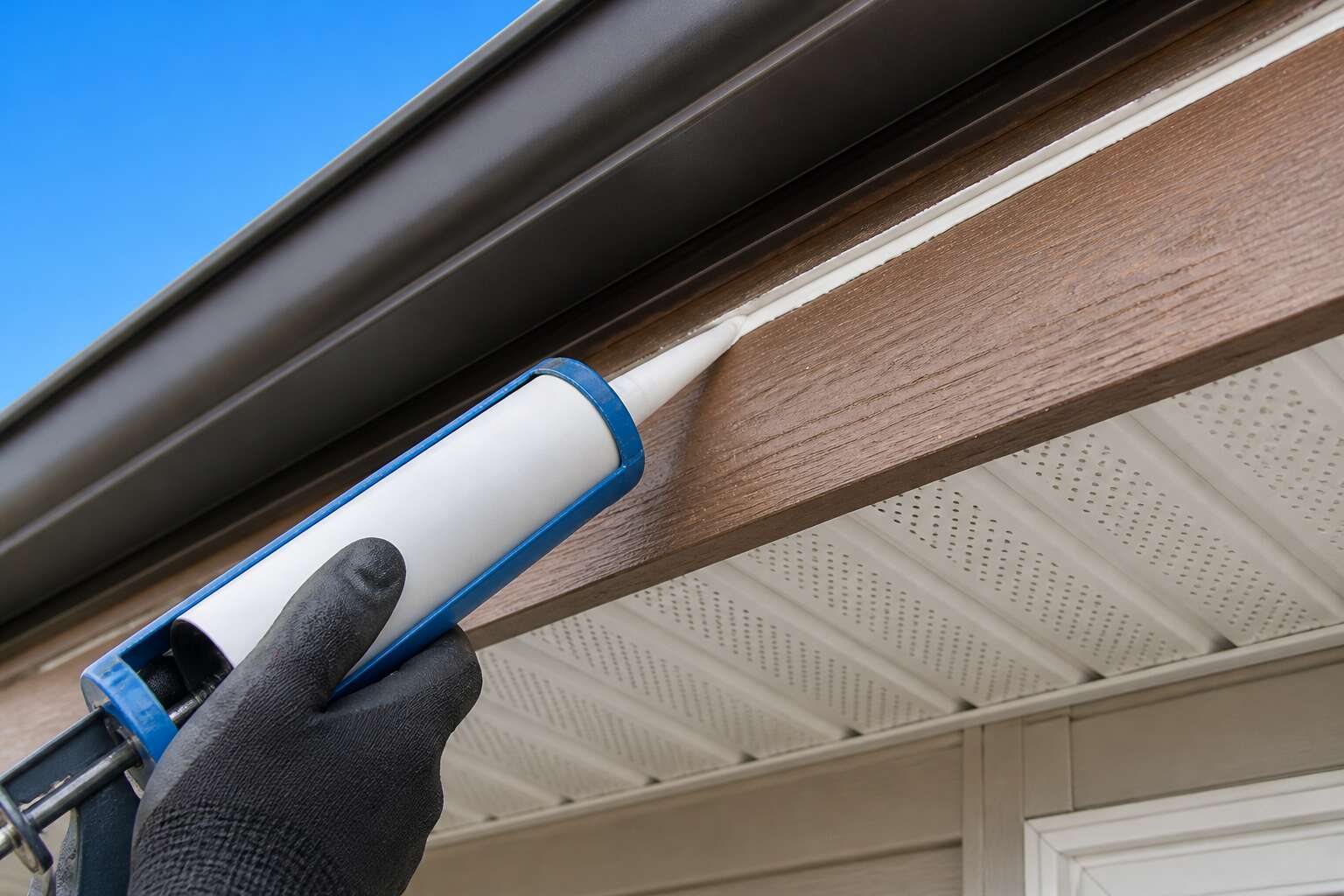
Sealing is where many roofline jobs quietly succeed or fail. After the new boards are up, I run a finger along every joint and feel for lips or gaps. A high quality polyurethane sealant handles the movement common in Highveld climates. I apply it in one continuous bead, then tool it once with a wet finger to press it into the seam.
Caulking deserves patience! I work in short sections, because the compound skins over quickly in Durban’s humidity or Johannesburg’s dry air. Once the joints are dressed, I check the final details:
– Wipe every surface with mineral spirits to remove dust and fingerprints.
– Inspect each corner for a clean, unbroken line.
– Look for hairline cracks that need one more pass.
These finishing touches separate a repair from a restoration. When I step back, the roofline should look continuous, with no visible transitions between old and new sections. That is the quiet proof of proper fascia and soffit repairs.
Cost Considerations and Budget Planning
Labor vs. Material Expenses: What to Expect
The true cost of fascia and soffit repairs rarely appears on the first invoice. Labour often dominates the total, especially when access is awkward. A single storey home in Johannesburg might see labour take up two thirds of the quote, while a Cape Town property with high gables flips that ratio entirely. Material expenses, by contrast, remain predictable across most suppliers.
When budgeting, remember that some costs hide until work begins:
– Disposal of old rotted boards
– Replacement of damaged ventilation inserts
– Scaffolding or ladder stabilisation fees
– Paint or sealant if your warranty demands a specific brand
I always advise setting aside an extra ten percent on top of the written estimate. That cushion absorbs surprises without derailing your planning. Comparing labour quotes from three contractors matters as much as comparing material prices. A cheaper hourly rate might signal rushed work that costs more later. Ultimately, the wisest budget accounts for both the visible expense today and the invisible wear you avoid for years.
Average Pricing Estimates for Common Repairs
Pricing for fascia and soffit repairs in South Africa varies by province and roof height, but certain averages hold steady. A single board replacement might cost between R350 and R700, while soffit panel swaps range from R400 to R900 per section. Ventilation insert replacements sit near R250 each.
- Fascia board repair: R350 to R700 per metre
- Soffit panel replacement: R400 to R900 per section
- Ventilation insert swap: R250 per unit
Budget planning demands a closer look. Always request itemised quotes, because hidden charges for scaffolding or disposal surface later. Set aside an extra contingency, and remember that urgent callouts during rainy seasons carry a premium. A written estimate protects both parties, but the real cost lies in what remains unseen until the first board comes away.
Factors That Can Alter Your Final Quote
An estimate is a figure written in good faith, yet the final cost of fascia and soffit repairs can shift before the first ladder is raised. In South Africa, the quote depends on conditions that reveal themselves only on site. Roof height, access points, and the state of the wood beneath the paint all play their part. A house that looks tidy from the street may hide rot that only becomes visible once the old board comes away.
Several factors will bend the number upward before the work begins:
- Scaffolding requirements for double storey homes or steep pitches
- Asbestos testing in older properties, which many municipalities require
- Disposal fees for rotten timber and paint debris
- Rainy season premiums for urgent callouts
Each of these increases the final invoice, and none of them appear in a simple price list. Budgeting for fascia and soffit repairs means planning for the variables that only surface during the work itself.
Money-Saving Strategies Without Cutting Corners
Cost considerations for fascia and soffit repairs go beyond the initial quote. A smart budget accounts for the unexpected, yet many homeowners focus only on the lowest tender. That approach often leads to rework, which costs more than quality work upfront.
Money-saving strategies without cutting corners start with timing. Schedule repairs in the dry season to avoid rainy day callout premiums. Bundle fascia and soffit repairs with gutter work, as contractors often offer a combined rate.
- Request a detailed breakdown of materials and labour
- Check for warranty on workmanship
- Use a local supplier to avoid delivery fees
Each of these steps keeps the budget balanced while ensuring that your fascia and soffit repairs endure the South African sun and storms. Spend once, spend wisely, and the roofline will thank you.
Insurance Coverage and Warranty Options
Insurance coverage for fascia and soffit repairs depends on your policy wording. Many South African homeowners assume storm damage is covered, but insurers often exclude wear and tear. A quick call to your broker can clarify what sudden events qualify. That single conversation might save you thousands.
Warranty options vary by contractor and material. Some suppliers offer guarantees only on the product, not the installation. Ask who backs the workmanship. A written warranty gives you recourse after the contractor leaves.
Policy documents typically specify:
– The excess amount you pay before a claim
– The types of sudden damage covered
– The window for reporting a storm incident
These details shape the true cost of fascia and soffit repairs.
DIY or Hire a Professional for Eaves Maintenance
When It’s Safe and Feasible to DIY
There is a quiet satisfaction in tending to your own roofline. For minor eaves maintenance, a steady ladder and a dry afternoon may be enough. Cleaning gutters, checking sealant, or replacing a single rotten board are tasks within a careful homeowner’s reach.
Fascia and soffit repairs, however, often conceal deeper troubles. Water damage lurks behind the panels, and pests nest where you cannot see from ground level. I have watched homeowners discover this too late.
When is DIY feasible? Consider these markers:
- You can place a stable ladder on level ground.
- The damage is limited to one visible board.
- You have the right tools and someone to hold the ladder.
Anything beyond this, especially at two-storey heights or near overhead lines, belongs to a professional. A fall costs more than any quote.
Essential Tools and Equipment Needed for DIY Repairs
Deciding between DIY and a professional for eaves maintenance often comes down to honesty about your own limits. For fascia and soffit repairs, a confident hand with a hammer is not the same as having a head for heights. I have seen clever homeowners misjudge a roofline, and the cost of that mistake never appears on a quote.
- Ladder stabilizers and standoffs
- Flat pry bar and nail puller
- Circular saw with a fine-tooth blade
- Caulking gun and exterior-grade sealant
Without these, even a single board replacement turns into a struggle. Professional work becomes the better choice when you lack the right equipment or the steady nerve for ladder work.
Safety Hazards to Consider Before Climbing a Ladder
Every year, emergency rooms treat falls from ladders that could have been prevented during fascia and soffit repairs. A fall from the roof edge can be fatal. Loose soil, uneven paving, and overhead power lines all change the risk profile. A ladder on soft ground shifts without warning.
Before climbing, inspect the eaves for signs of decay that might crumble under pressure. Also check your physical readiness. Dizziness, medication, or fatigue do not belong on a ladder!
- Confirm the ladder angle is 75 degrees, one unit out for every four up.
- Secure the base with a second person holding firm.
- Never reach sideways; climb down and reposition.
The ground may look level, but moisture from recent rain changes everything. Professional contractors assess these hazards daily, so their fascia and soffit repairs rarely end in a call to emergency services.
Key Advantages of Hiring an Experienced Contractor
Attempting eaves maintenance on your own can save money upfront, but the true cost appears when hidden damage is missed. Experienced contractors have seen decades of weather damage, so they spot early warning signs before they become structural issues.
Consider what a professional brings to your project:
- Accurate assessment of rot and water ingress
- Correct material selection for South African climates
- Access to specialized equipment for high or awkward eaves
Hiring a contractor also means your fascia and soffit repairs come with a workmanship guarantee. That protects you from repeat failures and expensive callbacks. For most homeowners, the peace of mind outweighs the DIY savings.
How to Choose the Right Roofline Specialist
Every year, South African homeowners climb ladders to scrape and paint rotting eaves, only to face the same damage within twelve months. The DIY versus professional question for eaves maintenance comes down to whether you can accurately judge what lies beneath the paintwork. Most hidden rot starts as a small crack that a hurried weekend job will never catch.
For shallow, cosmetic issues, DIY work may be fine. Once rot spreads into the rafter tails, fascia and soffit repairs demand an experienced eye. The right specialist inspects the entire eaves assembly and checks ventilation flow.
When vetting contractors:
- Ask for proof of recent workmanship guarantees, not verbal promises.
- Confirm they carry public liability insurance for high-level access.
- Request a written quote that separates material and labour.
Interview two or three specialists before deciding. Choose someone who explains the cause, not just the fix. The cheapest estimate skips underlying issues and leads to repeat fascia and soffit repairs.
Preventive Care to Extend Roofline Lifespan
Routine Inspection Schedules for Homeowners
Most homeowners only notice their roofline when something drips or sags. That is a costly mistake! Routine inspections every six months can prevent the need for extensive fascia and soffit repairs later. I recommend checking after the rainy season and again before summer. Look for peeling paint, warped boards, or gaps where birds nest. A simple checklist helps:
- Check for water stains on the soffit panels
- Press gently on the fascia to feel for soft spots
- Clear debris from ventilation gaps
- Look for insect activity near the edges
Staying consistent with these checks means catching problems while they are small. The odd half hour on a ladder is far cheaper than replacing rotted boards. Plan your next inspection around the equinox, and your roofline will thank you. Small effort, long term patience. That is the real secret to avoiding urgent fascia and soffit repairs.
Cleaning, Painting, and Sealing Best Practices
South Africa’s ultraviolet intensity damages exposed timber quickly. Untreated fascia boards lose protective oils and crack. Preventive care starts with a thorough wash using a mild biocide to kill algae and mould spores before they colonise the roofline. A stiff brush and low pressure rinse suffice. Do not let dirt dry on the boards.
Painting is where many homeowners make mistakes. Acrylic enamel with a built-in primer outperforms cheap alkyd paints under African sun. Two thin coats beat one thick coat! Soffit panels need the same treatment, but mask vents before spraying.
Sealing is the final layer. Apply polyurethane sealant to every joint where fascia meets soffit and where boards meet the gable end. Check sealant every two years. Soft, crumbling caulk is the first sign that fascia and soffit repairs are needed. Routine maintenance in March and September keeps your roofline watertight and reduces future fascia and soffit repairs.
Keeping Gutters Clear to Protect Fascia Boards
Preventive care begins beyond the boards themselves. The gutter system protects the roofline from water damage. When leaves and grit accumulate, rainwater spills over the edge and saturates the timber behind the gutter. That hidden moisture accelerates rot and makes fascia and soffit repairs unavoidable.
Clear gutters twice a year, especially after autumn and spring storms. Check brackets for sagging, and ensure downpipes discharge well away from the foundation. A simple routine:
- Remove debris by hand or with a gutter scoop.
- Flush the system with a garden hose.
- Inspect joints and end caps for leaks.
Keeping water moving freely is the cheapest insurance for your entire roofline. A dry fascia board can serve for decades; a wet one will not. Prioritise this task and you will delay or avoid the expense of fascia and soffit repairs entirely.
Improving Attic Ventilation to Reduce Moisture Buildup
Attic ventilation often goes unnoticed, but it directly affects moisture levels at the roofline. When warm indoor air rises into an unventilated attic, it condenses on cold surfaces such as the underside of roof sheathing and fascia boards. That condensation saturates timber and creates the conditions for rot! Proper ventilation flushes this damp air outward before damage takes hold.
Intake and exhaust vents must work in tandem. Soffit vents draw in cooler air, while ridge or gable vents release warmer air. This continuous flow keeps humidity low. A balanced system requires about one square foot of vent per 150 square feet of attic floor. Checking that insulation does not block soffit vents is a straightforward task.
We often neglect this simple step. Regular inspections of your attic ventilation can prevent costly fascia and soffit repairs. A dry attic keeps the roofline dry and reduces maintenance costs.
Seasonal Preparation for Storms and Temperature Swings
A single summer hailstorm can expose every weak point in a roofline. In South Africa, temperature swings from scorching days to freezing nights make materials expand and contract constantly. That movement opens gaps along the edges, and once water finds a path, fascia and soffit repairs become inevitable.
Preventive care means inspecting the roofline twice a year. Before the rainy season, walk around and look for boards that have shifted, paint bubbles, or small cracks. Coastal homeowners should check for salt residue, while Highveld residents must watch for UV brittleness after the dry winter. These checks take minutes, not hours.
One point to remember: the transition points between sections of fascia are where splitting usually begins. Sealing those seams early with a flexible exterior compound extends the life of the entire structure.


0 Comments