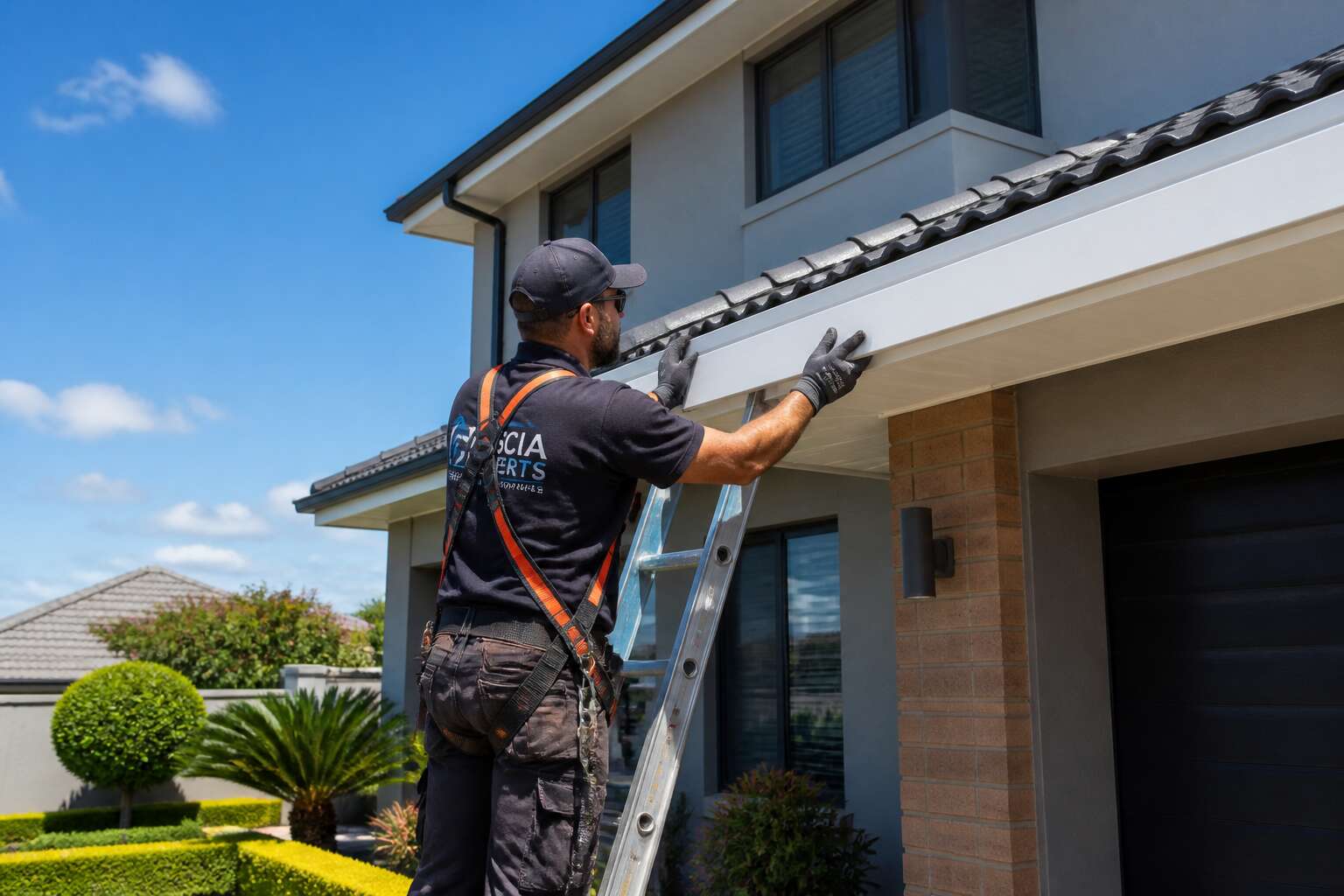
Understanding the Role of a Fascia Board Specialist
Why Fascia Boards Matter for Roof Integrity
Residents across Gauteng often discover rotten wood or sagging gutters only after significant water damage has already occurred. Many of these issues trace back to a single source, the fascia board. This narrow band is the architectural seam between your roof edge and the outside world. It carries the gutter system, prevents pests from nesting in roof voids, and forms a weatherproof seal against driving Highveld storms. A specialist understands the unique demands of local climates, from intense UV radiation to violent hailstorms, and applies materials and fixings that can withstand them.
The work performed by professional fascia board installers Gauteng homeowners trust goes beyond simple aesthetics. Correct installation involves precise cutting, seamless jointing, and strategic ventilation. A poorly fitted board allows moisture to wick into rafters and ceiling structures, leading to rot and compromising the entire roof envelope. Professionals also identify early warning signs of underlying structural issues that an untrained eye might miss. The long term performance of your roof depends on this attention to detail.
Issues that typically necessitate professional intervention include:
– Cracking or peeling paint that exposes bare timber.
– Gutter overflow caused by improper fascia height.
– Visible gaps between the board and roof tiles.
– Evidence of rodent or insect entry points.
When left unattended, these subtle failures accelerate structural decay, turning a minor repair into a costly replacement project.
Signs Your Fascia Needs Professional Attention
Every season, I witness the same quiet scene: a fascia board easing away from its rafters, millimetre by millimetre, unnoticed. The finest fascia board installers Gauteng has to offer read these signs with trained eyes, measuring the roof’s pitch, inspecting rafter tails, and calculating the structural load before any work begins.
Homeowners ask me when the moment for professional help arrives. Look for these clues:
- Fascia that feels spongy under fingertip pressure despite an unblemished paint surface.
- Moisture trails running down the underside of the boards.
- Loose or protruding nail heads that no longer secure the fascia to the structure.
These warnings mean the barrier has begun to fail. Professional understanding separates a surface blemish from a structural weakness. That judgement determines whether a simple repair suffices or rafter ends need attention. Acting early preserves the roofline and the rooms sheltered beneath it!
Selecting a Qualified Installer in Gauteng
Credentials and Licensing to Look For
Many homeowners only discover the true cost of a poorly installed fascia after a storm. That is why verifying credentials matters before you hire anyone. Reliable fascia board installers Gauteng should have a valid tax clearance certificate and proof of public liability insurance.
Ask for these documents, and check them carefully:
- Registration with the South African National Master Builders Association
- A written warranty covering workmanship and materials
- Certified copies of identity documents for all site workers
Licenses alone do not guarantee skill, but a lack of them is a warning sign. Installers who hesitate to share paperwork often cut corners elsewhere. You deserve a professional who works within the law and stands behind their output.
Verifying Experience with Local Architecture
Gauteng contains every architectural era South Africa has produced, sometimes within a few kilometres. A 1930s Parkview home with timber fascias shares little with a modern Kyalami estate where aluminium profiles dominate the skyline. Each requires a different installation approach.
When I evaluate fascia board installers Gauteng, I look for evidence of work on buildings that resemble my own. A portfolio filled with coastal projects tells me little about how someone handles the Highveld’s violent summer hailstorms and rapid temperature shifts. Local building methods, preferred materials, and the subtle details of how roof lines meet wall plates, all of this varies by region.
- Project portfolios that include comparable Gauteng properties
- Direct experience with the roofing materials common in your suburb
- Familiarity with the region’s seasonal weather patterns
Installers who operate across Gauteng’s townships, suburbs, and commercial zones develop a practical fluency that shows in the finish. Matching the right fascia board installers Gauteng to your property type matters as much as any technical credential.
The Importance of Written Quotes and Guarantees
A signature on a vague quote is a costly gamble. A verbal estimate means little when a contractor discovers rotted timber behind an existing profile. A proper written quotation itemises materials, labour, disposal fees, and a completion timeline, so you know exactly what you are paying for.
When evaluating fascia board installers Gauteng, ask what the quote covers and what it excludes. A reputable installer will specify the exact grade and type of fascia material, the estimated duration, and a workmanship guarantee in writing.
Guarantees matter because Gauteng’s climate exposes poor installation quickly. A written guarantee protects you if the fascia shifts after the first hail season. Insist on it before signing. Professional fascia board installers Gauteng will welcome this scrutiny, because their reputation depends on the durability of what they install.
Reading Reviews and Checking Past Projects
Most homeowners select the first fascia installer who answers the phone, which explains why mediocre work spreads across Gauteng suburbs. Reviews reveal how a contractor handles problems, and how they handle sunny days. Look for patterns in feedback, specifically mentions of sealant failure, warping, or delayed timelines.
Past projects matter more than promises. Ask to visit a completed installation or request photos with timestamps. A contractor who refuses to share recent work likely has something to hide. Reliable fascia board installers Gauteng will happily provide references from nearby neighbourhoods.
- Mentions of material quality and finishing
- Comments about clean-up and site safety
- Responses to complaints, which show accountability
Sites that look beautiful at handover often fail within months. Reading between the lines of past client experiences gives you the clearest picture of what to expect. Those details separate trustworthy fascia board installers Gauteng from operators who rely on flashy marketing.
The Installation Process from Start to Finish
Initial Inspection and Measurement
The installation process starts when fascia board installers Gauteng show up with tape measures and a bad attitude about shoddy work. The initial inspection covers rot, water damage, and any previous repairs of dubious quality. Everything gets documented, because surprises on a roof are expensive.
Measurement follows inspection. The crew records the full roofline dimensions, including every corner and joint. Precision here prevents drafts, leaks, and embarrassing gaps that birds will exploit.
- Measure the fascia length in segments.
- Verify the thickness of the old boards.
- Calculate the cutting allowance for expansion.
These figures drive the material order and the cutting plan. Reputable installers never rely on estimates. They use calibrated tools, and they do it twice. Your roof deserves that level of obsession.
Removing Old or Damaged Fascia Safely
The demolition phase is where patience matters most. Fascia board installers Gauteng know that prying boards off without care can rip the underlying roof sheathing. The crew works in reverse order of installation, starting at the highest point and moving down.
Each board gets scored along the paint line first. Trust me, this small cut prevents the roof paint from peeling back in large sheets. The team then checks for hidden fasteners.
- A pry bar with a wide flat edge distributes force safely.
- Brittle boards get cut into sections before removal.
- Rotten timber is removed from the site immediately.
Removal demands precision, not brute force. A professional crew extracts every nail and clears all debris, leaving a clean substrate ready for the new boards.
Preparing the Roofline and Soffit Connection
Somewhere in the installation process, the rhythm of the work shifts from demolition to construction. This is where skilled fascia board installers Gauteng truly earn their keep. The transition begins with the roofline and soffit connection, a junction that demands meticulous preparation.
Before a single new board is offered up, the substrate gets a thorough examination. Any residual moisture or debris invites trouble later. The crew ensures the drip edge is correctly aligned, creating a clean break for water runoff. They also verify the soffit panels are securely fitted, as a loose connection here compromises the entire fascia line. This preliminary stage often involves:
– Checking the alignment of the roofline to ensure a straight, true surface
– Sealing any gaps between the soffit and the wall to prevent pest ingress
– Priming the bare timber edges to promote a strong adhesive bond
Once the preparation is complete, the true craft begins. The new fascia boards are measured and cut with a precision that comes from years of experience. Each joint is mitred for a seamless appearance, avoiding the bulky look of butt joints. The installers secure the boards with corrosion resistant fasteners, driving them flush without cracking the material. This methodical approach ensures the new boards sit perfectly flush against the roofline, creating a unified and weathertight seal. The entire process, from the first cut to the final nail, is a testament to the value of professional installation.
Fitting and Securing New Fascia Boards
The new boards arrive clean and primed. The crew positions each length against the roofline, marking cuts with a pencil. A wrong angle here means waste.
The fitting is deliberate. Fascia board installers Gauteng run each board along the drip edge, checking the level before a fastener goes in. They use galvanised screws driven into the timber, spaced for natural expansion of the PVC. Boards are joined where the seams land on rafter tails, never floating between them. Each screw is driven flush, not buried, so the surface stays intact.
The crew then runs a final pass:
- Level across every joint
- Seams tight against the next board
- Fasteners seated without cracking the face
The fascia sits straight against the soffit, held firm through wind and rain.
Final Sealing, Painting, and Cleanup
The last screw is in, but the job is not done. Fascia board installers Gauteng apply a flexible sealant along the top edge where board meets roofline, and where joints meet corners. The crew works in a sequence:
- Run a continuous bead along the drip edge
- Press sealant into every corner joint
- Smooth each bead before it skins
Curing takes time, so the crew moves on to cleanup while it sets.
Then paint or finish. Pre-primed boards may need a topcoat. The crew masks the soffit and walls, then applies the paint in even strokes. They check for drips.
Cleanup follows. Every scrap, every screw, every empty cartridge goes off site. The crew sweeps the perimeter. The client sees only the finished roofline, straight and sealed.
Cost Considerations and Service Areas in Gauteng
Factors Influencing Fascia Installation Prices
In Gauteng, the price of a fascia board installation can vary as much as the province’s weather. It is a folly to assume that a single quote holds true for every suburb, from the leafy expanse of Waterkloof to the industrial edges of Germiston. What a homeowner in Pretoria East pays will differ from a property in Krugersdorp due to local material availability and the specific logistics of each site.
The true cost is a direct reflection of the work involved, not the whims of the installer. A significant driver of the final figure is the linear meter count combined with the condition of the underlying timber. Furthermore, the height of the property and the difficulty of access play a dominant role. For a clear picture, consider the primary drivers:
– The type of fascia material selected, such as uPVC or timber.
– The pitch and height of the roof line.
– The requirement to handle and dispose of asbestos-laden boards.
– The necessity for specialized scaffolding equipment.
Ultimately, reputable fascia board installers Gauteng homeowners trust will include travel time in their quotation. Since the greater Johannesburg area is expansive, covering areas from Centurion to the East Rand, the distance to your property is a tangible factor. Labor rates are also subject to regional variances. Therefore, securing a quote from a qualified team operating within your specific municipal area ensures you are paying for the current market reality, not a blanket national figure. This locality also means they are familiar with the specific building regulations of your district, which is a quiet benefit that protects your investment.
Comparing Quotes and Avoiding Hidden Fees
Comparing quotes from fascia board installers Gauteng requires more than glancing at the bottom line. A figure that seems lower might exclude essential steps such as sealing the soffit connection or removing old fasteners. Ask each contractor to break down labour, materials, and travel separately.
Service area matters. I have seen quotes from Johannesburg teams that quietly add a logistic surcharge for properties in Tshwane. Confirm that the installer covers your specific suburb without hidden extras.
- Check whether the quote includes debris removal and disposal permits.
- Confirm if scaffolding is priced per day or as a fixed rate.
- Ask if the price changes when roof pitch exceeds a standard measurement.
Hidden fees surface when material delivery fails or when existing timber needs patching. The most reliable fascia board installers Gauteng property owners trust will list these possibilities in advance. A short written contract protects both parties and removes surprises.
Understanding Warranties on Workmanship
A twenty minute drive can add R500 to your project, which is why service area matters alongside the quote itself. A contractor based in Johannesburg South might exclude Krugersdorp from their standard rate. Confirm your suburb is covered and ask whether scaffolding is charged per day or as a fixed rate. Roof pitch changes the price too, so request an itemised breakdown.
Understanding warranties on workmanship protects you after the final payment. A written guarantee from reliable fascia board installers Gauteng homeowners trust should specify the duration and scope. Typically, coverage runs one to five years and includes:
- Sealant failure and water ingress
- Separation at the joints
- Fastener popping over time
Read the exclusions carefully. Timber movement is often excluded, and so is damage from birds or blocked gutters.
Availability of Installers in Johannesburg, Pretoria, and Surroundings
Gauteng spans many suburbs, each with its own travel realities. Work in Johannesburg may cost more when reaching Pretoria or the East Rand. Mileage and crew time add up. Ask if your quote includes travel. Some fascia board installers Gauteng homeowners trust operate province-wide, while others stick to a 30 kilometre radius.
Scaffolding is often where costs creep in. Two-storey homes in suburbs like Sandton or Brooklyn need proper access equipment. Confirm if the rate covers a day or a fixed period. Availability also shifts seasonally. The summer storm season in Gauteng drives demand, so booking early matters.
Consider this when comparing:
- Travel distance and fuel surcharges
- Scaffolding hire per day
- Peak season availability
Reputable fascia board installers Gauteng locals trust list these costs upfront. Installers in Johannesburg and Pretoria juggle multiple projects. A local specialist may offer faster response times. That convenience should appear on your price.
Emergency Repair Services for Severe Weather Damage
The Gauteng summer storm season doesn’t mess around. Hail the size of golf balls, wind that rearranges rooflines, and fascia boards that take flight. When that happens, you need fascia board installers Gauteng homeowners can call on a Sunday night. Emergency services cost more. That’s the price of urgency.
Service areas matter in emergencies. A team in Centurion might reach you in twenty minutes. A crew from Boksburg could take over an hour. Callout fees often depend on distance.
Typical emergency cost factors include:
- After-hours callout fees
- Temporary waterproofing measures
- Overtime labour rates
- Priority scheduling during peak season
Storm damage repairs often require coordination with insurance assessors. Installers who work across Johannesburg and Pretoria regularly handle these claims. They know which suburbs flood, which areas get hammered by hail, and where the wind funnels through. That local knowledge saves time. Time saves money.
Maintenance Tips to Extend the Life of Your Fascia
The price of fascia work in Gauteng depends on where you live. An installer who drives from Pretoria to Vanderbijlpark must account for fuel and travel time, and those costs land in your quote. Local crews keep overheads lower. When you compare fascia board installers Gauteng, ask each one whether distance adds a callout fee.
Service areas matter for maintenance too. The same installer who replaced your boards last year can spot early warning signs during a gutter clean. The Highveld climate punishes neglect. Keep seams sealed and paint fresh.
Three routines prevent most fascia problems:
- Clean gutters before the first big storm.
- Inspect corners where boards meet.
- Touch up chipped paint before moisture reaches the timber.
A short professional visit every eighteen months costs less than replacing rotted boards.
Ensuring Quality and Long-Term Performance
Spotting Subpar Workmanship
After the final coat of paint, the true measure of a fascia installation hides in the details. A clean roofline can conceal rushed work, and that is why every homeowner should inspect the seams closely. Uneven joints or gaps along the board edges signal carelessness, while smooth transitions show deliberate craftsmanship.
When you hire reliable fascia board installers Gauteng, you expect longevity, but subpar work often reveals itself within months. Common signs include:
- Sagging sections where fasteners didn’t bite into timber
- Cracked sealant that peels away from the soffit
- Drips staining the paint line
These flaws create moisture pathways that compromise the roof structure. Instead of trusting a glossy finish, press lightly on the board to feel for movement. A solid installation remains rigid. If you spot these issues early, you can demand corrective work before the warranty expires. Experienced fascia board installers Gauteng rarely leave such traces.
Coordination with Gutter and Roofing Contractors
Ever seen a fascia board that looks immaculate until the first heavy downpour? That often happens when trades ignore the rest of the roof ecosystem. Reliable fascia board installers Gauteng coordinate closely with gutter and roofing contractors before anyone signs off. The order of operations matters. Fitting new fascia before the gutters, but after the roof underlayment is laid, keeps water flowing where it belongs. When these specialists work in silos, water finds the weak points.
Watch for these coordination failures on any project:
– Improper flashing that traps moisture behind the gutter brackets
– Fasteners driven too high, piercing the roof edge flashing
– Gaps that invite bird nests and wasp colonies
A seasoned fascia installer schedules a joint walkthrough once the roof sheathing is in place. They confirm drainage slopes and edge trims together with the roofer. That vigilance prevents expensive callbacks later, and it ensures the whole roofline performs as one system for years.
Securing Permits and Adhering to Local Regulations
Securing the correct permits determines the long-term performance of any fascia project. In Gauteng, experienced fascia board installers Gauteng treat municipal approvals as an essential step, not a technicality. They understand that adhering to local regulations prevents structural surprises years later. This legal groundwork directly influences water flow, fastening strength, and material lifespan.
Quality emerges from that rigor. An installer who pursues permits also verifies wind resistance, drainage slopes, and fire safety standards. Without these checks, a single storm can expose hidden flaws. The most dependable professionals document every inspection, from the initial framework to the final sealant bead.
Consider what permit compliance delivers:
- Confirmed alignment with municipal by-laws
- A transparent path for home insurance claims
- Predictable maintenance for the owner
That diligence ensures the roofline remains sound through many seasons.


0 Comments