Understanding Box Gutter Systems
Definition and Function of Internal Box Gutters
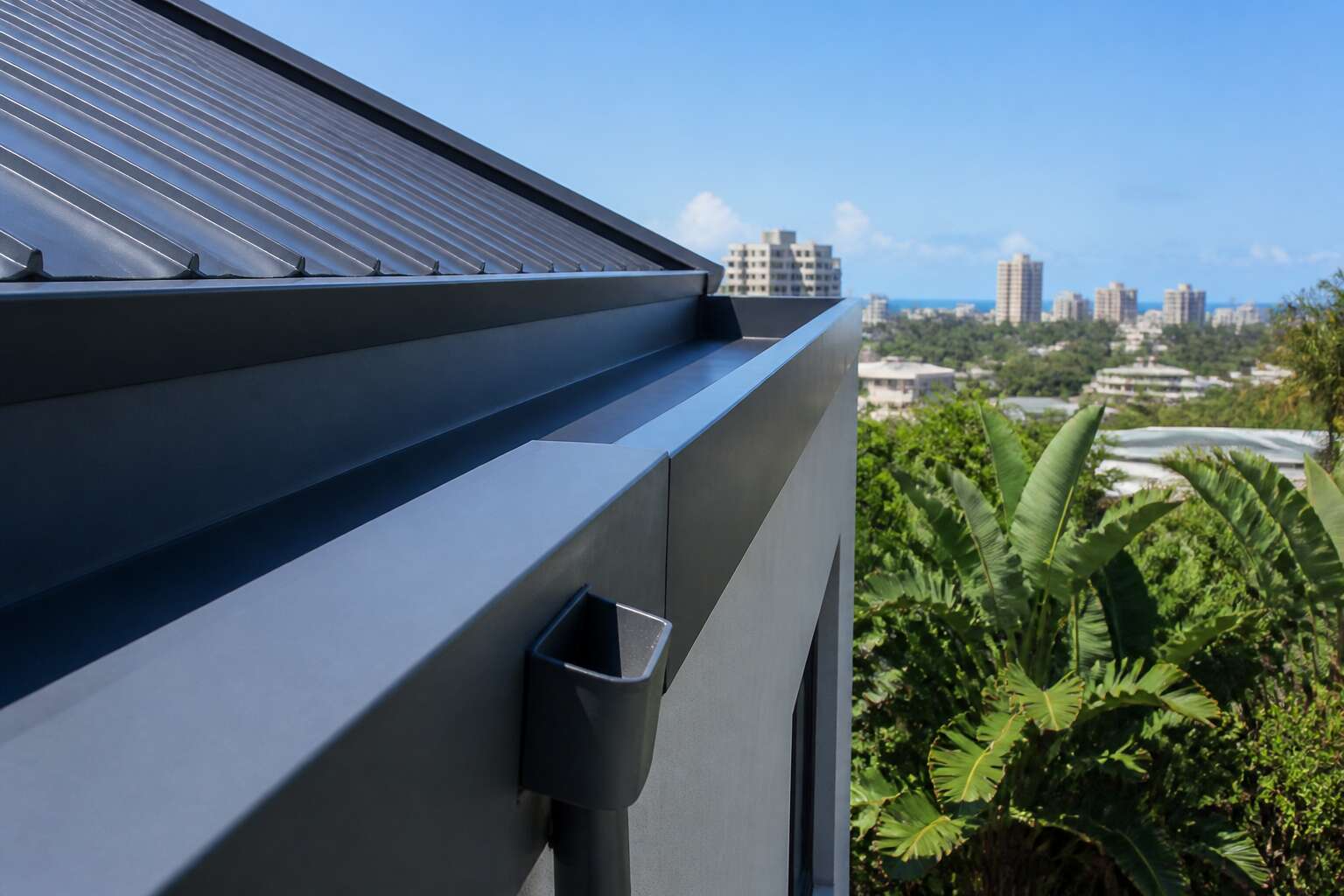
In coastal KwaZulu-Natal, where summer storms arrive with little warning, a building’s true resilience often hides inside its roofline. Internal box gutters are concealed channels built into the roof structure, positioned behind parapets rather than along the eaves. Unlike exposed gutters, they collect runoff from expansive roof surfaces and guide it through the building’s interior to vertical downpipes. This concealment demands precise engineering, since any failure occurs within the building’s fabric!
These systems function as controlled pathways for stormwater, managing high volumes during tropical downpours. The primary duties include intercepting runoff from split roof planes, preventing water from weeping onto walls, and conveying flow to discharge points. Specifying internal box gutters Durban demands careful attention to membrane selection and slope, since the city’s humidity amplifies any deficiency. Contractors installing internal box gutters Durban must verify every joint and seal before cladding conceals the work.
Types of Box Gutter Configurations
Durban’s summer storms do not negotiate. They arrive with a theatrical clap of thunder and a wall of rain that tests every hidden seam of a building. The internal box gutters Durban relies on are not a single solution, but a family of designs, each answering a different architectural challenge.
Some configurations sit flush against a single wall, while others straddle the valley where two roof planes meet. The geometry of the roof dictates the choice, and the choice dictates how water behaves under pressure. A well designed system turns chaos into a quiet, controlled flow.
Common configurations include:
- Conventional box gutters, set between parallel roof slopes.
- Parallel box gutters, where two gutters run side by side to manage very wide roof spans.
- Secret gutters, hidden entirely behind parapet walls for a clean exterior line.
Each configuration carries its own set of tolerances. The membrane, the fall ratio, and the expansion joints all shift depending on which type is specified. For internal box gutters Durban contractors must also consider the material’s response to humidity. Zinc and copper behave differently in coastal air than they do inland. The choice is not merely aesthetic, it is a calculation of longevity. A hidden system that fails is an insidious failure, one that surfaces far from the source of the leak. So the configuration is not just a drawing detail. It is the building’s internal weather system, waiting patiently for the next downpour to prove its worth.
Materials Typically Used in Construction
Material selection for internal box gutters Durban specifiers choose is a matter of survival, not preference. The coastal air carries salt that corrodes unprotected metal. Zinc remains a traditional choice, reliable but demanding careful workmanship. Copper offers a longer service life, though its cost makes many pause.
Stainless steel has grown in favour for its resistance to the chloride-laden atmosphere. Aluminium is lighter and easier to handle, but softer. I have seen galvanic corrosion undo a system within three years when metals were mismatched. The sheet thickness, seam quality, and solder method determine whether the gutter outlasts the roof or fails quietly.
- Zinc: traditional, needs expansion allowance
- Copper: durable, develops a protective patina
- Stainless steel: corrosion resistant, higher cost
- Aluminium: lightweight, requires careful handling
Each material responds differently to the humidity between Durban’s storms. The choice for internal box gutters Durban determines how long the system remains sound.
Sizing and Design Principles
Getting the sizing right for internal box gutters Durban architects specify is not an exercise in guesswork. It is a calculation of probability. Durban receives over a thousand millimetres of rain a year, often in short, violent events. A gutter that copes with the daily drizzle can be overwhelmed in fifteen minutes when a subtropical low sits over the coast. The consequences are not a minor leak. Water backs up under the roofing membrane, saturating insulation and staining ceilings within hours.
The design process starts with the catchment area, but that number is deceptive. The effective area changes with roof pitch and the position of parapets. Then there is the rainfall intensity figure for a one in fifty year event, which for Durban is around one hundred and ten millimetres per hour during peak summer months. An undersized rectangular box allows water to flow over the front edge before the storm reaches its peak.
The critical design variables form a short list:
– The slope of the gutter base, which must direct water to the outlet without being so steep it complicates the flashing.
– The depth of the water column that a particular width can carry before surcharge occurs.
– The size and position of the sump and rainhead, which govern how quickly water exits.
– The overflow weir location, designed to carry water away from the building if the outlet blocks.
The arithmetic is exact, but the execution tolerances are brutal. A difference of fifteen millimetres in the base fall changes the flow rate considerably. The positioning of the internal box gutters Durban installers set on site must match the engineer’s drawing precisely. I have seen a perfectly calculated system fail because the overflow outlet was placed ten millimetres too high, forcing water to seek a path through the wall cavity during a heavy downpour. The design of internal box gutters is a matter of converting rainfall data into a hydraulic profile that keeps the building dry.
Advantages Over Traditional Gutters
Every gutter is a promise that water will go where the architect intends. Traditional external gutters break that promise quietly, with rusted seams and sagging brackets. They are exposed to the full heat of the Durban sun, then suddenly flooded with warm rain. The thermal shock accelerates metal fatigue. Internal box gutters Durban engineers specify sit inside the roof cavity, shielded from direct weather. That positioning alone extends their functional life.
– Concealment of the drainage path preserves the architectural lines.
– A wider channel accepts high flow without overshooting.
– Integration with flat roof membranes is more direct.
The advantages become obvious when you inspect a property after a decade. Traditional gutters sag between brackets, fill with leaves, and overflow at the corners. Box gutters carry water directly to a rainhead, reducing the number of components that can fail. The system is also quieter, with no drumming of water against thin aluminium suspended under the eaves. Internal box gutters Durban property owners choose offer a cleaner silhouette and a more predictable flow path. That consistency matters when a subtropical storm arrives without warning.
Durban-Specific Climate Factors
Seasonal Rainfall Patterns and Intensity
Durban receives over 1,000 millimetres of rain annually, but the timing of that rainfall matters more than the total. Most of the city’s precipitation arrives between October and March, when warm Indian Ocean air collides with inland heat. These summer storms don’t linger; they unleash powerful downpours that test every hidden channel.
For internal box gutters Durban, the intensity matters more than the annual total. A single hour can deliver more than 60 millimetres of water, especially in the early evenings. This deluge flows off expansive roofs and funnels into concealed gutters, where capacity and slope determine whether water escapes safely.
- Peak rainfall occurs during November to February
- Short, high-intensity downpours exceed 50 mm per hour
- Thunderstorms often strike without prolonged warning
Understanding these seasonal rhythms helps property owners appreciate why these installations demand precise sizing. The climate doesn’t offer gentle drizzle; it tests systems under sudden, extreme loads!
Humidity and Its Impact on Materials
Durban’s humidity seldom drops below 70 percent in midsummer, and it often hovers near 85 percent for consecutive days. That ambient moisture affects every component of a roof assembly. For internal box gutters Durban, the challenge is not rainfall volume but perpetual dampness.
Moisture permeates joints and micro cracks, quickening galvanic corrosion in fasteners and softening rubber seals. Wood battens swell when wet and shrink later, opening pathways for water to escape. Humidity also attacks protective coatings.
- Metal oxidation accelerates
- Paint films blister and flake
- Organic residue invites mould
These processes occur out of sight, inside roof voids, where ventilation is limited. Materials selected for Durban’s internal box gutters must tolerate constant humidity, not just occasional inundation.
Coastal Corrosion Challenges
In Durban, the ocean is a constant, unseen participant in every roofing system. Salt-laden air drifts inland on the prevailing breeze, settling as a fine crystalline film on exposed metalwork. For internal box gutters Durban, this saline deposit is more corrosive than any rainwater. The salt absorbs moisture from the air, creating a persistent electrolyte on the surface. This ionic solution aggressively attacks the protective zinc layer on galvanised steel, and it compromises the integrity of stainless steel fittings over time.
The damage manifests in specific, identifiable patterns. Pitting corrosion begins as small, nearly invisible points of attack. These points deepen into structural weaknesses that go unnoticed until a failure occurs. The chloride ions in sea spray are particularly effective at breaching passive oxide layers. Fasteners are the first casualties. Screws, rivets, and joint clips suffer from crevice corrosion where two surfaces meet. This process is silent, relentless, and often undetectable during routine visual inspection.
For an internal box gutters Durban installation, the design must account for this specific environmental attack.
– Aluminium components offer a passive oxide layer that self-heals, but it remains vulnerable at fastening points.
– Grade 316 stainless steel provides superior chloride resistance compared to standard 304.
– The choice of sealant and flashing material is as critical as the gutter profile itself.
The corrosion is not limited to the metal. The fasteners used to secure the gutter system also suffer from galvanic action when dissimilar metals come into contact. Saltwater acts as a catalyst, accelerating the electrolytic reaction. The result is a buildup of corrosion products that expands and exerts pressure on surrounding materials. This pressure can crack welds and distort the gutter profile. The coastal air also degrades the protective coatings on the interior of the gutter. Paint systems that perform well inland will blister and peel within a few years in Durban’s coastal conditions. Every material choice for internal box gutters Durban must undergo a rigorous evaluation for marine-grade suitability.
Heat, UV Exposure, and Material Degradation
Durban’s sun is a slow solvent. The city’s UV index routinely hits 11 in summer, and that radiation works on every exposed surface. Internal box gutters Durban take direct hits all year. Ultraviolet light breaks the polymer chains in protective paints. Sealants chalk and lose elasticity. Within a few seasons, the topcoat cracks and flakes away.
Heat accelerates the process. The temperature differential between sea breeze and midday peak can exceed 20 degrees Celsius. This thermal cycling forces the gutter to expand and contract daily. Joints fatigue. Fastener holes enlarge. The metal itself weakens under repeated stress.
– Acrylic coatings fail fastest under UV exposure.
– Polyurethane systems last longer but still degrade without proper formulation.
– Dark-coloured gutters absorb more heat, increasing internal stress.
The degradation is cumulative and rarely visible until leakage appears. Specifying internal box gutters Durban for this climate means prioritising UV stable materials and light reflective finishes.
Stormwater Management and Overflow Risks
The Durban thunderstorm delivers forty millimetres in under twenty minutes. The city’s stormwater system cannot absorb that surge. Internal box gutters Durban must carry the full load alone, usually while the downpour is still intensifying.
The overflow risk is not theoretical. Undersized gutters back up within minutes. Water climbs over the overflow weir and enters the building envelope. Roofers in Durban see it every summer.
- Debris from overhead trees blocks outlets quickly
- Inline filters reduce capacity during peak flow
- Angled stormwater outlets slow discharge under pressure
A system sized for average rainfall will fail on a peak event. Stormwater management in Durban means designing for the 1 in 50 year storm, not the seasonal figure. When internal box gutters Durban cannot shed water faster than the sky delivers it, interior damage follows within minutes.
Installation and Building Compliance
Local Building Codes and Regulations
Durban’s building inspectors have sharp eyes when it comes to concealed drainage. Internal box gutters Durban installations must satisfy SANS 10400 and the city’s stormwater by-laws, and neither authority tolerates guesswork. One homeowner discovered this when an unapproved overflow detail delayed their certificate of occupancy. The correction took three weeks and cost far more than proper compliance would have.
Compliance hinges on sealed joints, correct fall ratios, and access points for future cleaning. The eThekwini municipality also requires engineered drawings stamped by a professional engineer. These submissions are not ceremonial. They inform flood risk assessments and prevent downstream failures on neighbouring properties.
Typical municipal requirements include:
- approved, stamped drawings
- corrosion resistant materials matched to coastal conditions
- overflow calculations for a 50 year storm
- inspection before any cladding is installed
Builders who skip these steps face costly reversals and delayed approvals.
Steps for Proper Installation
Installing internal box gutters Durban demands precision that most roofers never learn. The work begins with setting the fall ratio. One degree too flat, and water pools. One degree too steep, and the overflow weir cannot do its job.
The sequence rarely varies:
- First, the gutter bed is prepared and the channel is set to its engineered gradient.
- Second, each joint is soldered, welded, or sealed with approved gaskets.
- Third, the overflow outlets are fitted and tested with standing water.
- Fourth, the entire assembly is water tested before any cladding goes near it.
The testing stage separates professionals from guesswork. A proper test fills the gutter to the overflow lip and watches how it drains. This reveals poor joints and incorrect fall ratios immediately. Builders who skip this step often discover the damage months later, when ceilings begin staining.
Waterproofing and Sealant Requirements
Compliance for internal box gutters Durban rests on two pillars: the approved waterproofing membrane and the sealant’s bond integrity. I have watched inspectors reject perfect fall lines because the sealant lacked a chemical cure compatible with the substrate. The South African National Standards demand a minimum 24 hour water hold test before any cladding covers the work. This is not a formality. In Durban’s humid coastal air, a pinhole in a soldered joint becomes a slow poison for timber trusses.
Waterproofing membranes must be torch applied or fully adhered, never loose laid. Sealants require a primer, regardless of manufacturer claims. The sequence matters:
- Clean every surface with solvent.
- Prime the metal edges.
- Apply the sealant in a single continuous bead.
- Tool the bead to force out air pockets.
Each step corresponds to an inspection point. Skip one, and the certificate of compliance dies. The building inspector will test the overflow weir, the water level, and the membrane laps. No paint will save a gutter that fails at the interface. Water always finds the unsealed edge.
Integration with Downpipes and Drainage Systems
The internal box gutters Durban system becomes a living entity only when its veins connect to the discharge network. The downpipe junction is the first point of failure, a place where the horizontal plane of the gutter meets the vertical velocity of a storm. Installers must verify that the outlet spigot is welded flush, not merely sealed with a mastic bead. A proud lip will create a constant ponding depth, which in this coastal climate accelerates the degradation of the membrane.
The integration demands a precise hydraulic calculation for the downpipe capacity. The combined flow must never exceed the pipe’s full bore capacity, as pressurised flow will force water back over the overflow weir.
To achieve a compliant system, the installation sequence follows a strict protocol:
1. Align the gutter fall towards the sump or outlet.
2. Fit the rainhead or leaf screen before the downpipe connection.
3. Secure the downpipe with brackets that allow for thermal movement.
4. Test the entire drainage path with a weighted flow before final cladding.
The drainage system must also be designed for the Durban summer deluge, where the intensity can overwhelm a pipe sized for average rainfall. A choked downpipe is the leading cause of structural damage, as the internal box gutters Durban installation turns into a reservoir. The overflow weir must discharge to a visible, safe location, not direct water onto a walkway or foundation. This integration is the final guard against the relentless Indian Ocean moisture. It is the threshold where design meets durability, and compliance is the key that locks it all together.
Common Installation Mistakes to Avoid
Installing internal box gutters Durban might look straightforward, but the margin for error is razor thin. The most frequent mistake we encounter is treating the building inspector as an afterthought. Those professionals enforce the SANS 10400 regulations for a reason, and their approval is not a rubber stamp. Gather your compliance documentation before the first panel is cut, not after the waterproofing fails.
Another common error is a lazy fall ratio. A gutter that looks level will hold water, and standing water is the enemy of every seam and fastener.
Watch for these recurring slips:
– Failing to prime exposed metal edges before sealing.
– Choosing a steel gauge too light for the roof span.
– Installing the overflow weir below the required height.
Each error forces the internal box gutters Durban installation to deviate from the approved drawings. When the final inspection arrives, the work must match the plans, not the contractor’s memory of them. Compliance is the difference between a system that passes and one that needs to be ripped out.
Hiring Qualified Contractors in the Region
Choosing the right person to install internal box gutters Durban is a decision that carries real weight. I have watched property owners learn this lesson after the first heavy storm. The contractor you hire becomes the guardian of your building’s most vulnerable junction, where water meets structure. A qualified installer for internal box gutters Durban does not simply follow a diagram; they interpret the building’s specific conditions, the local humidity, the salt-laden air that corrodes from within.
Ask about their track record with Durban’s seasonal downpours. Request proof of certification, not promises! Speak to past clients about how the contractor handled unexpected findings, because every roof reveals surprises. The right professional welcomes this scrutiny. They understand that a gutter system is only as honest as the person who assembles it. Their work either protects your building for decades or quietly undermines it. That difference begins with the choice you make today.
Maintenance and Repair Strategies
Routine Inspection and Cleaning Schedules
Durban’s humidity and salt air turn routine maintenance of internal box gutters Durban into a structural survival priority. A quarterly inspection catches debris before it blocks the narrow channels. Look for standing water, rust spots, and sealant failures.
Set a cleaning schedule that matches the rainy season. Before October’s downpours, clear leaves and sediment. After major storms, recheck outlets. Biannual deep cleans work for most properties.
- Inspect joints for gaps or corrosion.
- Flush downpipes to confirm water flows freely.
- Document findings for future reference.
Repairs should target the root cause. Small cracks often signal bigger drainage problems. Prompt action prevents ceiling damage and costly structural work.
Identifying Early Signs of Damage
Spotting damage early requires looking beyond obvious leaks. For internal box gutters Durban, pale crystalline deposits called efflorescence on walls below the roofline indicate moisture escaped the gutter channel and entered the masonry. Peeling paint on ceiling bulkheads often signals persistent humidity from a slow weep. Fascia boards become wavy when the box gutter structure flexes under strain.
A flat screwdriver sinks into soft metal at suspicious joints, revealing corrosion beneath the coating. Downpipes emit dull thuds instead of a metallic ring when blockages sit inside. Photographs with dates convert each anomaly into a repair record that guides precise decisions later.
Debris Removal and Vegetation Control
Debris removal and vegetation control demand a particular kind of attention. The internal box gutters Durban homeowners rarely see sit hidden behind parapets, collecting leaves, seeds, and windblown grit without a sound. That silence deceives. A single seedling rooting in decomposed organic matter can breach sealant seams within months. Every overhanging branch feeds the problem.
Clearing the channel is quiet, repetitive labour. It matters because debris holds moisture against metal, and moisture undoes every waterproofing decision made during installation. Vegetation control cuts invasive growth before roots exploit tiny fractures. Pulling weeds from a gutter might feel absurd, until you understand what corrosion costs. The maintenance you postpone never disappears. It compounds, silently, inside walls you cannot see.
Repairing Leaks and Seals
When a leak finally announces itself as a water stain on a ceiling, the internal box gutters Durban property owner faces a decision. The repair strategy depends on what the sealant is doing. Modern sealants flex with thermal movement, but only at the correct depth and width. A thin bead cracks. A thick one blisters.
Surface preparation determines whether a repair lasts or fails within months. Rust, old sealant residue, and moisture must be removed down to bare metal. Solvent cleaning is non negotiable. Then the fresh sealant gets tooled into the joint, not smeared over it.
- Inspect the entire sealant run, not just the visible leak point.
- Check adjacent joints at the parapet wall.
- Test old sealant for adhesion before applying new material.
Water travels inside a failed seal, emerging metres from the breach. Repairing the visible stain ignores the path water took. The internal box gutters Durban system works as one channel, so each repaired section must match what surrounds it.
When to Consider Full Replacement
Maintenance for internal box gutters Durban requires a routine, not a reaction. Each season brings a different pressure, from leaf litter to coastal salt. A proactive strategy records what you find. It tracks sealant condition, sediment buildup, and the sound of water during heavy rain.
There comes a moment when repair stops making sense. The signs are specific:
- Corrosion has eaten through the metal at several points.
- The profile has warped beyond alignment.
- Repeated sealant failures appear in the same joint.
Full replacement is the rational choice, though owners often postpone it. I have seen gutters with more sealant than metal remaining. Replacement, while costly, restores the entire channel’s integrity. Spot fixes buy time. Replacement buys certainty.
Cost, Efficiency, and Benefits
Comparing Initial Costs with Long-Term Durability
The most expensive gutter is the one you buy twice. That truth surfaces quickly when comparing prices for internal box gutters Durban. The upfront figure often makes property owners wince. But that number tells only half the story. A cheaper alternative may need replacement within a decade, while a properly specified internal box gutter can serve for thirty years or more.
Efficiency compounds the benefit for internal box gutters Durban. These systems handle intense rainfall without the frequent blockages that plague exposed gutters. Consider what actually drives long term spending:
- Repair frequency
- Water damage risk
- Replacement intervals
The real advantage is avoiding repeated expenses. In my experience, clients who choose quality once pay less overall. The initial outlay is an investment, not an expense.
Impact on Energy Efficiency and Cooling
The old adage, pay me now or pay me later, finds its truest expression in the roof void. When evaluating internal box gutters Durban, the confluence of cost and efficiency dictates the financial story of the building. A system designed for the region’s sudden, violent storms is not a luxury; it is a fundamental component of asset protection.
Efficiency here is about volume and velocity. These concealed channels manage the surge of water that a standard external gutter would simply overwhelm. To put this into perspective regarding your operational budget:
– The reduction in cleaning frequency saves costs associated with high-risk labour.
– The absence of water pooling prevents the corrosive degradation of the roof deck.
– A sealed system protects the structural integrity of the trusses and ceiling boards.
This leads to a profound, yet often overlooked, benefit regarding energy efficiency and cooling. A dry, ventilated roof cavity works as a thermal buffer. When internal box gutters Durban prevent moisture ingress, they preserve the insulative quality of the ceiling material. Wet insulation loses its R-value entirely. By keeping the building envelope dry, you reduce the heat load on the air conditioning system. The cost of the gutter is offset by the sustained performance of your cooling systems, which no longer work overtime to compensate for a damp, heat-radiating ceiling.
Aesthetic and Architectural Value
The real price of a roof drainage system emerges over decades, not at installation. For internal box gutters Durban, this means weighing the initial outlay against the avoidance of structural repairs that surface when water leaks elsewhere. Efficiency is measured in how much water moves through the system during a ten minute downpour, and how little maintenance the setup demands.
- Eliminates exposed metal that clashes with clean architectural lines
- Preserves the visual continuity of the roofline
- Adds resale value through integrated design
These concealed channels transform a functional necessity into a design asset. The systems allow architects to specify uninterrupted fascias and minimalist parapets, which matter in coastal developments where visual clutter detracts from the property. The benefit is a precise, engineered profile that resolves the tension between drainage capacity and building aesthetics.
Environmental and Sustainability Considerations
Internal box gutters Durban may carry a higher upfront price than exposed alternatives, yet the lifecycle ledger tells another story. A well fabricated system avoids the periodic swap outs that exterior gutters demand, and that saving compounds with every wet season. Efficiency emerges from the geometry itself. The smooth, enclosed path moves high volume stormwater with less resistance, which means fewer clogs and a lower chance of backup during the short, violent downpours this region expects. Environmental value follows naturally. Repurposed metals reduce the carbon footprint of manufacture. The sealed channel limits evaporation loss and keeps moisture away from insulation. For property owners tracking both budgets and emissions, the calculations favor a permanent solution.
Resale Value and Insurance Implications
The cost conversation for internal box gutters Durban starts at installation, but it ends at the conveyancing attorney’s desk. Property appraisers assign a premium to a certified internal system because the structure avoids the degradation cycle that external troughs invite. Insurers run their own calculations; water intrusion claims drop sharply when the drainage channel is enclosed and documented, so premiums reflect that altered risk profile.
This is where the owner sees the return. A prospective buyer examines the ceiling, the rafters, and the waterproofing certificates. What they find determines the offer. Efficiency transforms into equity when the system requires no replacement budget line for thirty years.
- Lower annual insurance premiums
- Higher resale appraisal figures
- Reduced buyer hesitation during inspection
The financial returns rest on that physical installation, and it is a position I have seen hold firm in Durban’s property market!




0 Comments